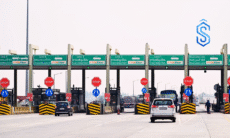

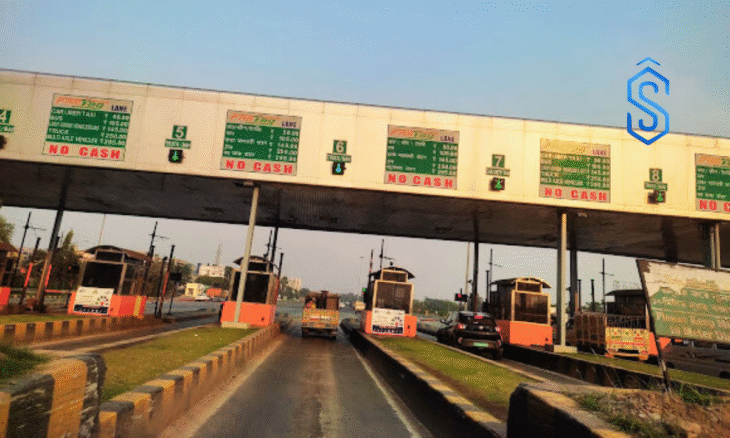
Cashless toll collection is set to become a reality as the National Highways Authority of India (NHAI) is contemplating the complete discontinuation of cash transactions at National Highway fee plazas across the country from 1st April 2026.
All toll payments at National Highway fee plazas will be processed exclusively through digital modes using FASTag or Unified Payments Interface (UPI), marking a significant shift towards a fully digital tolling ecosystem.
The proposed move to implement cashless toll collection from April 1, 2026 aims to consolidate the gains achieved in electronic toll collection and strengthen the efficiency and reliability of National Highway fee plaza operations.
According to the proposal, the transition to digital-only toll payments will enhance ‘Ease of Commuting’ for National Highway users by improving lane throughput, reducing congestion at fee plazas, and ensuring greater consistency and transparency in toll transactions.
Also Read: Brahmaputra Underwater Road Rail Tunnel: Cabinet Clears Project Worth ₹18,662 Crore
Over 98% FASTag Penetration Drives Digital Push
Over the past few years, more than 98 percent penetration of FASTag has significantly transformed toll collection practices across the country.
At present, an overwhelming proportion of toll transactions are processed electronically through RFID-enabled FASTag affixed to vehicles, enabling seamless and contactless movement across toll plazas.
With cashless toll collection from April 1, 2026, this digital momentum is expected to accelerate further. In addition to FASTag, UPI payment facilities have already been operationalized at National Highway toll plazas, ensuring instant and accessible digital payment options for commuters nationwide.
The shift to exclusive digital payments under the cashless toll collection framework will formalize the transition that has already taken shape through widespread FASTag adoption and UPI integration.
Cashless Toll Collection: Revised User Fee Structure for Non-FASTag and UPI Payments
As per National Highway fee rules, vehicles entering a fee plaza without a valid and functional FASTag are charged twice the applicable user fee if the payment is made in cash.
On the other hand, National Highway users who choose to pay via UPI are charged 1.25 times the user fee for the applicable vehicle category.
These measures have progressively reduced dependency on cash transactions and supported the digitization of the tolling framework.
The upcoming cashless toll collection proposal seeks to eliminate cash transactions altogether, thereby streamlining operations and minimizing ambiguities at toll plazas.
Also Read: Inland Water Transport Network in India: IWDC 3.0 Approves Over INR 1,500 Crore Projects
Digital-Only Payments to Improve Traffic Flow and Efficiency
Plaza-level assessments have indicated that cash-based payments contribute to congestion, longer waiting times during peak traffic periods, and transaction-related disputes.
By implementing cashless toll collection from April 1, 2026, NHAI aims to strengthen operational efficiency and improve traffic management across the country.
A complete transition to digital-only payment modes is expected to minimize delays and enhance the overall experience for National Highway users at more than 1,150 fee plazas located on various National Highways and Expressways.
The initiative aligns with NHAI’s broader objective of building a technology-driven, high-efficiency National Highway network that delivers faster and seamless services to users nationwide.
Through cashless toll collection the authority seeks to further modernize toll operations and reinforce transparency, reliability, and commuter convenience across India’s highway infrastructure.